
Different Ways of Serving Kambo
There are SO many ways that Kambo can be served, and every practitioner develops their own relationship with the medicine and their own approach over time. That being said, let’s take a look at some of the common differences.
Water vs. No Water vs. Yucca/Cassava
Some practitioners serve Kambo with plain water, others with yucca water, and some choose to serve it without any water at all. I can’t speak to all of these approaches personally, but I’ve learned that in some Brazilian traditions, water isn’t given when someone is working with Kambo for emotional or mental purposes. That’s not something I personally feel comfortable with UNLESS there’s a clear reason — for example, if someone has a block around vomiting, or a specific biological need that makes water unhelpful or disruptive to their process.
Cassava (or yucca) is a traditional drink often used in the jungle during Kambo ceremonies. The idea is that it’s gentler on the stomach, easier to purge, and can slightly reduce the risk of hyponatremia. Some practitioners feel that cassava is safer and more effective than the common Western approach of drinking 1.5 liters of water before a session. The Matses, for example, traditionally drink masato—a fermented yucca drink—and only consume about 350 to 500 ml before their sessions.
From my own experience, and from what I’ve learned through trusted teachers, the general consensus seems to be that a copious amount of water isn’t essential to the process as many think. People often assume that more purging equals more healing, but I believe that’s a misunderstanding. Encouraging someone to drink enough water to prevent dry heaving makes sense; asking them to overconsume water doesn’t. It tends to make the process more uncomfortable, and can be more dangerous, as excessive water intake can dilute the body’s sodium levels and lead to hyponatremia.
The medicine works internally, whether a person purges or not. The peptides stimulate the liver and bile to release what needs to go, which the body then naturally eliminates through the intestinal tract. There’s no need to force more water for the process to be effective. For this reason, I don’t have strict requirements or restrictions around water volume — only that people come properly hydrated in the hours and days leading up to their session.
Flat Doses for Everyone vs. Tailoring Dosage
Some practitioners serve a flat, uniform dose to everyone. Sometimes a large dose. This approach is incredibly misguided and, frankly, irresponsible—as well as a waste of medicine. Some people need more. Some people need less. It is the job of the practitioner to serve safely and take into consideration a person’s experience, tolerance to substances in general, intention, comfortability, sensitivities, and to always start with a small test dot and layer up slowly.
Crawling vs. Walking to the Bathroom
Another difference in styles of serving lies in whether participants are encouraged to crawl or walk to the bathroom. If a practitioner’s approach to serving Kambo is to start low and slow, then I do not see any reason to have crawling to the bathroom as mandatory. If people are being blasted, then yes that would be a good precaution to have. To clarify, I do NOT believe anyone should be walking to the bathroom by themselves without an escort or buddy!
Energy Points & Placement
Some practitioners focus on energy points or meridians for dot placement. I do not focus on energy points or meridians myself, although I am open to serving in areas that someone may prefer - granted that it can be done safely.
Contraindications
A contraindication is a specific condition or factor that makes a treatment or practice potentially unsafe or unsuitable for someone. In the context of Kambo, contraindications refer to certain health conditions, medications, or physical states that may increase the risk of an adverse reaction during a session. That said, caution and contraindications are not universally agreed upon. You can read my listed contraindications & cautions here. Some practitioners take a very conservative approach, while others have safely served people who might be considered “contraindicated” by standard guidelines and have still experienced deep benefits.
Every facilitator develops their own thresholds, discernment, and intuitive sense of safety through experience.
Early on in my practice, I had a woman come to me with several contraindications—conditions I had been trained not to serve under. However, she had sat with Kambo more than thirty times before. She understood her body deeply, knew her process well, and had a strong relationship with the medicine. After speaking with her, I felt completely comfortable serving her. This experience reminded me that Kambo is not a one-size-fits-all medicine. Context, intuition, and mutual trust play a vital role in determining whether a session feels safe and aligned.
Tools
The tools practitioners use to help stimulate a purge can differ. Some cultures—such as certain Brazilian traditions—don’t use rapé/hapé and don’t believe in mixing the two medicines.
I was taught in the Matses tradition that hapé can be a supportive tool in two specific ways:
To bring on a remaining purge. Hapé can help when someone feels there’s still more to release but the nausea has eased and isn’t strong enough to trigger a purge on its own.
To help someone come down from any remaining sensations. Hapé can ease lingering nausea and ground a person back into a sense of normalcy after the peak of the experience.
Activating Kambo with Saliva vs. Water
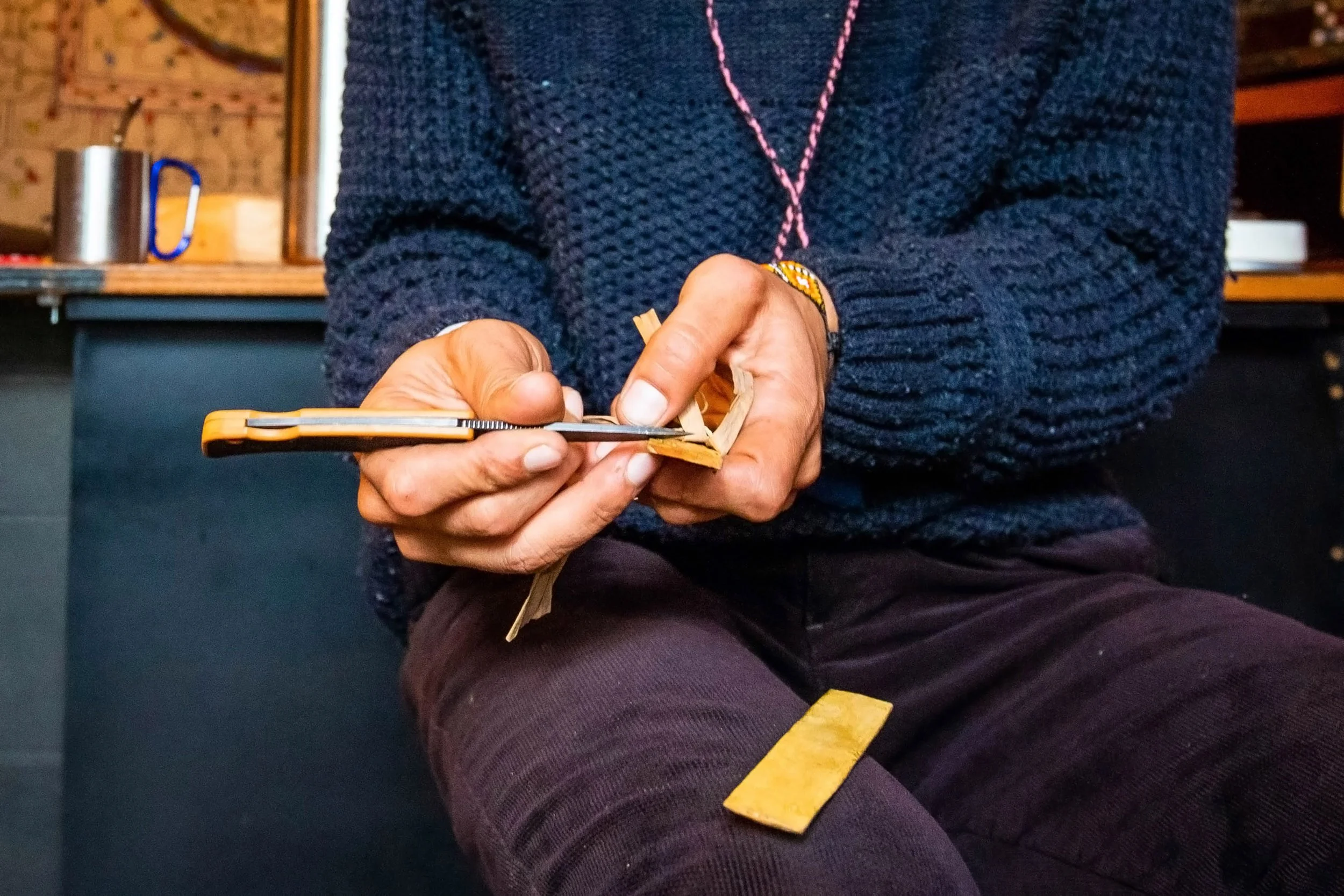
Kambo is traditionally stored on bamboo sticks as a dried secretion. To activate and apply it, we add a small amount of liquid until it becomes a soft, gooey paste that can be placed on the body. Some traditions believe that using the recipient’s saliva is beneficial because it contains their DNA, allowing the Kambo to “communicate” more directly with the body and understand what work needs to be done.
From a hygiene perspective, I personally prefer not to use saliva. I also don’t believe Kambo needs additional help to know where to focus. I’ve seen many people experience very specific physical sensations during a session that directly relate to what they’re working through or need support with. In my experience, Kambo naturally knows where to go and what to do without saliva being part of the process. As always, if this approach resonates deeply with someone, I’m happy to accommodate them.
Timing How Long the Medicine Stays On vs. Letting the Process Guide the Timing
Some practitioners are taught to keep the medicine on for exactly 20 minutes. I find this approach limiting—and often unnecessary—especially when I’m slowly determining the best dosage for someone during their early sessions. That process can naturally take longer than 20 minutes.
If someone is given a large dose right away, then yes, setting a 20-minute timer can make sense to help manage the intensity of the peak and ensure the medicine is removed at the right time. But I also believe there is something incredibly beautiful about working with Kambo intuitively. I’ve seen people sit in bliss, experiencing visions for an hour with only mild physical symptoms, and I would never want to interrupt that kind of experience.
I’ve also supported people whose first session was physically gentle and who wanted to explore a slightly larger dose to understand how their body responds. When the timing, space, and safety allow, I’m happy to offer additional medicine in a controlled and attentive way. For me, time doesn’t need to be a limiting factor. The body and the process make it clear when the work is complete—and when that moment comes, we remove the medicine naturally.
